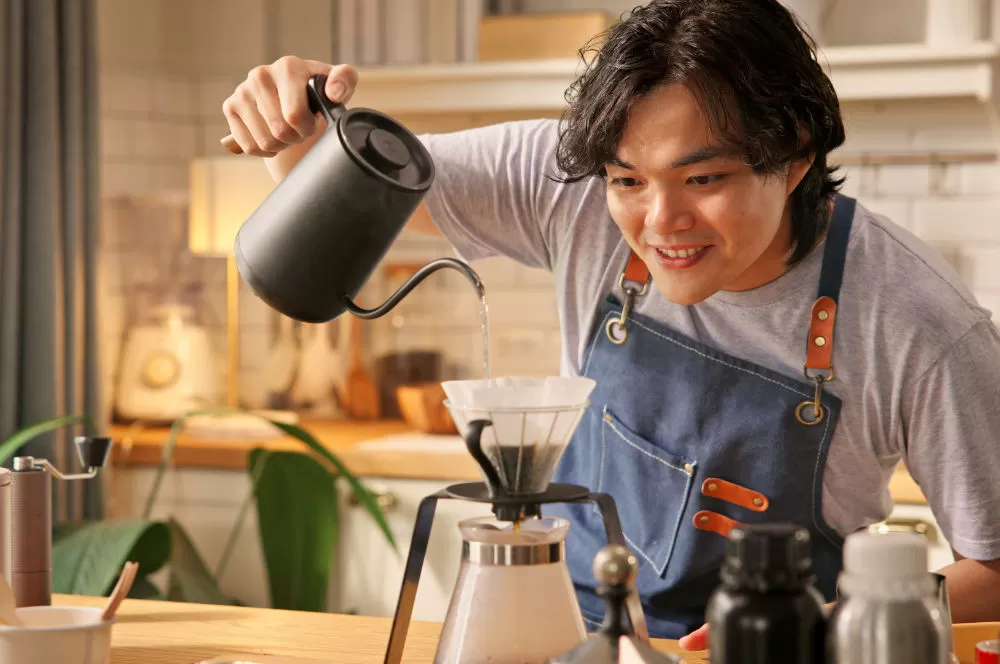
Most people come to good coffee slowly. A jar of instant. A chain on the way to work. A small café that does things a little differently, then a specialty bar where the person behind the counter asks how you take it and means the question.
Somewhere along the way a thought arrives: could I make this myself? You can. This is for that moment — a plain account of what the words on the bag mean, what you need, and what you don't.
What the third wave is
The roaster Trish Rothgeb gave the idea its name in 2002. The first wave made coffee ordinary: a tin in every kitchen, bought on price. The second made it a place to go — espresso, milk, a name written on the cup. The third treats coffee the way good produce is treated: as something grown somewhere, by someone, with a character that depends on both.
In practice that comes down to three things. You know where the coffee comes from, down to the farm. It is roasted to show that place rather than cover it. And it is brewed with enough care that the difference reaches the cup.
None of it needs expertise. It needs attention, and most of what follows is simply what to pay attention to.
Why a coffee has flavour notes
A bag that reads caramel, peach, floral has no caramel, peach or flowers in it. The notes describe, the way you might say a wine tastes of cherries. Coffee is the seed of a fruit, and it carries the conditions it grew in — the variety, the soil, the altitude, the rain, how ripe the cherry was when it was picked.
Read the notes as a suggestion of what to look for, not a promise. On the first cup you may taste only coffee. By the fifth you may find the sweetness they describe. Both are fine.
What processing means
Once the cherries are picked, the seed has to come out of the fruit and be dried. How that is done is called the process, and it shapes the cup as much as the roast does.
- Washed. The fruit comes off before drying. Clean, bright and clear — the farm and the variety come through most directly. We have written about it at length in Understanding the washed process.
- Natural. The whole cherry dries with the seed inside. Fuller and sweeter, often with a ripe fruit character.
- Anaerobic natural. The cherry is sealed and fermented before it dries. Deeper again, and darker in its fruit.
- Honey. Some of the sticky fruit is left on the seed while it dries. Somewhere between washed and natural: rounded, soft and sweet.
If you find a coffee you like, look at how it was processed. It is often the quickest way to find the next one.
Roast, and how to find yours
Roasting turns a hard green seed into something that can be brewed. A lighter roast keeps more of where the coffee came from: more acidity, more fruit, more of the particular farm. A darker roast brings forward the roast itself — body, bitterness, chocolate, smoke — and less of the place.
Neither is correct. If you drink your coffee with milk, or have always liked it strong, start around medium to medium-dark. If you drink it black and the brighter cups at specialty cafés are what caught your attention, go lighter.
Each of our coffees names its farm, process, roast and altitude, so you can choose from what you already know about your own taste.
What grind size does
Brewing is water drawing flavour out of ground coffee. Grind size decides how quickly that happens. Fine grounds have more surface and give up their flavour fast; coarse grounds give it up slowly. Each method wants a different grind because each keeps water and coffee together for a different length of time.
- Coarse, like sea salt — French press and cold brew, where the coffee steeps for minutes or hours.
- Medium, like sand — pour-over, AeroPress and drip machines, a few minutes of contact.
- Fine, close to table salt — espresso and the moka pot, where water is pushed through under pressure.
If you keep one thing from this piece, keep this. When a cup tastes sour, thin or hollow, grind finer next time. When it tastes bitter or dry, grind coarser. Change nothing else while you find it.
What a V60 is
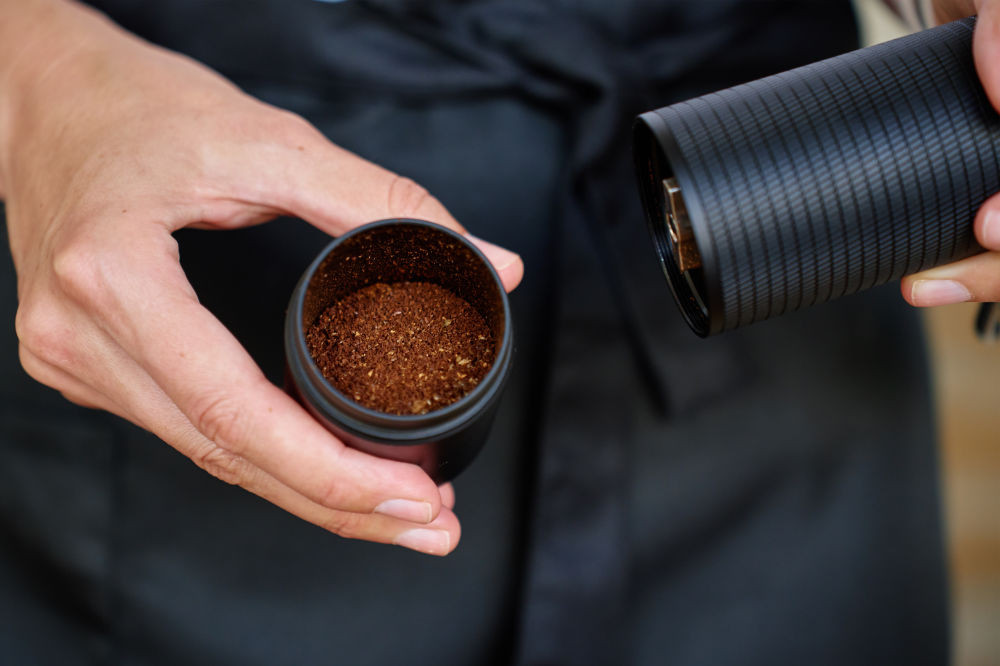
V60 is a pour-over dripper made by Hario, in Japan. The name describes the shape: a V-shaped cone with walls at sixty degrees. Spiral ribs inside and a single wide hole at the base let water run through freely, so the pace of the brew depends on how you pour.
Pour-over itself is simple. Hot water is poured slowly over ground coffee sitting in a paper filter and drips through into the cup below. The paper holds back most of the oils and fine particles, which is why pour-over tastes clean, and why specialty cafés reach for it when a single-origin coffee needs to show what it is.
A V60 is one cone among several, and all of them work on the same principle. Our pour-over cone does the same job, and our pour-over guide gives the recipe we return to most mornings: 15g of coffee, 250g of water, three minutes.
Do you need an expensive grinder?
You need a grinder more than you need an expensive one. Coffee starts to lose its aroma the moment it is ground, and grinding just before you brew is one of the easiest improvements there is.
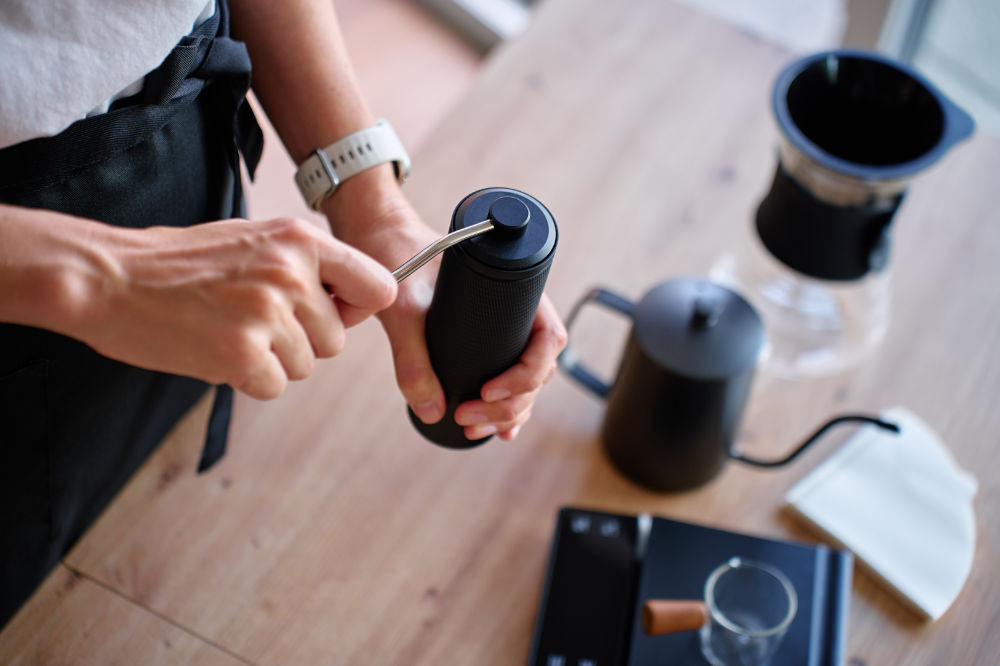
What matters is the kind of grinder. A blade grinder chops unevenly, leaving fine dust and large pieces in the same dose. The dust over-extracts and turns bitter while the pieces under-extract and taste sour, both in one cup. A burr grinder crushes the beans between two surfaces set a fixed distance apart, so the pieces come out close to the same size.
A good hand burr grinder usually costs far less than an electric one of the same quality, and it is more than enough for pour-over, AeroPress and French press. Espresso is the exception. It asks for a grind so fine and so precise that this is where an expensive grinder earns its price. If espresso is not where you are headed yet, it can wait.
Not ready for a grinder at all? Our coffees can be ground for you before they ship — choose coarse, medium or fine when you add a bag to your cart. Buy 250g at a time and finish it within a couple of weeks. Or begin with our drip filters: single cups, already portioned, needing only a mug and hot water.
If you buy one other thing, make it a kitchen scale that reads in grams. Our brew guides measure coffee and water by weight, and it is what makes a good cup repeatable.
Where to start
Everything above applies to coffee grown anywhere. Ours is grown only in the Philippines and bought direct from farms we name, and the four coffees on our shelf make a fair map of the ground covered here.
- Darago. Anaerobic natural Catimor from Arnel Morales in Bansalan, Davao del Sur. Medium roast; caramel, peach and milk chocolate. The easiest place to begin, black or with milk.
- Lourdes. Natural Typica from Lourdes Aligo in Sagada, Mountain Province, grown at 1,500 masl. Medium roast; citrus, dark chocolate and a soft floral lift. For anyone the brighter café cups stayed with.
- Apo Sandawa. Anaerobic natural Catimor from JL Dela Cerna, grown at 1,650 masl on the slopes of Mount Apo. Medium roast; orange, cherry and chocolate. Brew it beside Lourdes for a clear lesson in what process does to a cup.
- Adarna. Natural Excelsa from Erna D. Balmes in Candelaria, Quezon. Medium-dark roast; chocolate, caramel and ripe jackfruit. A different species altogether, and a reminder that coffee here is more than arabica.
One thing at a time
You do not need to know all of this before the first bag. Choose a coffee, brew it the same way for a few mornings, then change one thing — the grind, the ratio, the water — and taste what moved.
If you would rather not think about running out while you learn, a subscription roasts the coffee you choose to order and sends it on, and you can pause, change or cancel it from your account whenever you like.
No one catches the wave in a morning. It comes the way most good things do: slowly, one cup at a time.